Mantises, particularly known for their distinctive appearance and unique predatory behaviours, have captivated the attention of both scientists and enthusiasts alike. Their history is intertwined with evolution, ecology, and culture, making them a remarkable subject of study. This article delves into the history of mantises, exploring their evolution, classification, ecological significance, and cultural impact throughout human history.

Evolutionary History
Origins
Mantises belong to the order Mantodea, which is believed to have originated over 300 million years ago during the Carboniferous period. The earliest ancestors of modern mantises were likely small, predatory insects that emerged alongside other primitive insect groups. The fossil record indicates that mantises have undergone significant evolutionary changes, adapting to various ecological niches and developing their iconic features.
The oldest known mantis fossil dates back to the Late Permian period, approximately 260 million years ago. This fossil, discovered in what is now modern-day Russia, showcases the primitive characteristics that would later evolve into the sophisticated predatory adaptations seen in contemporary mantises.
Diversification and Adaptation
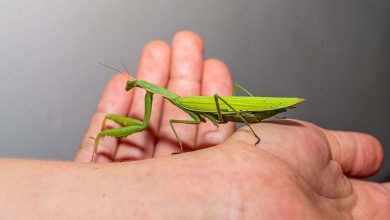
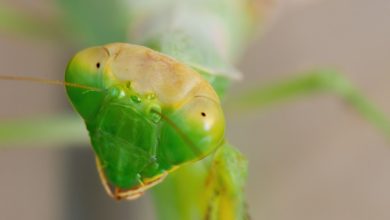
Mantises evolved during the Mesozoic era, a time when dinosaurs roamed the Earth. The evolutionary pressures of this period led to the diversification of mantises into various families and genera. They developed elongated bodies, triangular heads, and a unique posture that allows them to blend seamlessly into their surroundings. This ability to camouflage is a crucial adaptation for ambush predation, enabling mantises to hunt a variety of prey, including other insects, small reptiles, and even small mammals.
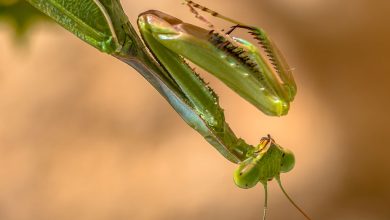
One of the most significant evolutionary adaptations of mantises is their forelegs, which are adapted for grasping and holding prey. These raptorial forelegs, equipped with sharp spines, allow mantises to seize and immobilise their victims swiftly. This predatory efficiency has contributed to the success of mantises in various habitats, from tropical rainforests to temperate gardens.
Taxonomy and Classification
The order Mantodea is further divided into several families, with the two most prominent being the Mantidae and the Empusidae. The Mantidae family includes many well-known species, such as the European Mantis (Mantis religiosa) and the Carolina Mantis (Stagmomantis carolina). The Empusidae family is known for its bizarre and often strikingly shaped species, such as the Devil’s Flower Mantis (Idolomantis diabolica).
Mantises are typically classified based on various morphological features, including the structure of their eyes, the shape of their forelegs, and the characteristics of their genitalia. Recent molecular studies have also provided insights into the evolutionary relationships among different mantis species, leading to a re-evaluation of their taxonomy.
Ecological Significance
Role in Ecosystems
Mantises play a vital role in their ecosystems as predators. Their presence helps regulate insect populations, making them crucial components of many ecological communities. By controlling the numbers of herbivorous insects, mantises contribute to the health of plant communities and the overall balance of their ecosystems.
In addition to their role as predators, mantises are also prey for various animals, including birds, reptiles, and mammals. This dual role in the food web underscores their significance in maintaining ecological balance.
Habitat Diversity
Mantises are found in a wide range of habitats, from forests and grasslands to deserts and urban areas. Their adaptability to different environments is remarkable. For instance, some mantises have evolved to mimic leaves or flowers, enhancing their camouflage in environments where they can easily blend in with the foliage. This ability to adapt to different habitats has contributed to their widespread distribution across the globe.

Cultural Impact
Symbolism and Representation
Throughout history, mantises have held cultural significance in various societies. In ancient Egypt, they were often depicted in art and mythology, symbolising transformation and resurrection. The ancient Egyptians revered the mantis as a creature of the gods, associating it with the divine and the afterlife.
In many cultures, mantises are seen as symbols of patience and stillness due to their characteristic hunting behaviour, where they remain motionless for extended periods while waiting for prey. This trait has led to the mantis being associated with mindfulness and contemplation in various philosophical traditions.
Mantises in Folklore and Mythology
Mantises have also found their way into folklore and mythology. In some Native American cultures, the mantis is regarded as a trickster figure, embodying both wisdom and cunning. The Zuni people, for instance, view the mantis as a teacher, imparting lessons about the importance of patience and observation in the natural world.
In modern times, mantises have been featured in literature, art, and popular culture. Their unique appearance and behaviours have inspired numerous artists and writers, leading to their portrayal in various forms of media. This cultural fascination has contributed to the ongoing interest in mantises and their role in biodiversity conservation.
Mantises and Humans
Interaction with Humans
The relationship between mantises and humans has evolved over time. In some cultures, mantises have been kept as pets or used in traditional medicine. In Asia, particularly in China, mantises have been used in traditional herbal remedies for centuries, believed to possess various healing properties.
In agriculture, mantises are often regarded as beneficial insects. Their predatory nature makes them effective at controlling pest populations in crops. As a result, many farmers encourage mantis populations in their fields to reduce the need for chemical pesticides.
Conservation Concerns
Despite their ecological importance, many mantis species face threats due to habitat loss, pesticide use, and climate change. Conservation efforts are crucial to protecting these fascinating insects and maintaining the balance of ecosystems in which they reside. Public awareness campaigns and education about the ecological roles of mantises can help foster a greater appreciation for these remarkable creatures and their conservation.
Modern Research and Future Directions

Scientific Studies
Recent advances in molecular biology and genetics have opened new avenues for studying mantises. Researchers are exploring their evolutionary history, behaviour, and ecology using modern techniques such as DNA sequencing and phylogenetic analysis. These studies provide valuable insights into the evolutionary relationships among mantis species and their adaptive traits.
Furthermore, the study of mantis behaviour, particularly their mating rituals and predatory strategies, has garnered significant attention from scientists. Understanding these behaviours not only contributes to our knowledge of mantises but also sheds light on broader ecological principles.
Mantises in Education and Outreach
Mantises are often used in educational settings to teach students about insect biology, ecology, and evolution. Their unique characteristics and behaviours make them engaging subjects for classroom discussions and hands-on learning experiences. By fostering interest in mantises and their roles in ecosystems, educators can help cultivate a sense of stewardship and responsibility towards the natural world.
Conservation Initiatives
Conservation organisations and researchers are increasingly recognising the importance of mantises in biodiversity conservation. Initiatives aimed at protecting their habitats and promoting sustainable agricultural practices can help mitigate the threats faced by these insects. Public engagement and citizen science projects, where individuals can contribute to monitoring mantis populations, play a crucial role in conservation efforts.
The history of mantises is a rich tapestry woven from their evolutionary journey, ecological significance, cultural impact, and interactions with humans. From their ancient origins to their contemporary roles in ecosystems and human culture, mantises continue to fascinate and inspire. As we move forward, it is essential to recognise their importance and work towards their conservation to ensure that future generations can appreciate the remarkable history and beauty of these incredible insects.
References
Svenson, G.J. & Whiting, M.F. (2004). “Phylogeny of Mantodea: A Molecular Approach.” Molecular Phylogenetics and Evolution, 33(1), pp. 115-138.
Hennemann, F.X. & Conle, O.V. (2004). The Mantidae of the World. Zoologische Verlagsgesellschaft, GmbH.
Koptur, S. & Whitaker, J. (1990). “Role of Mantises in Ecosystems: A Review.” Environmental Entomology, 19(1), pp. 71-80.
Naskrecki, P. (2000). The Praying Mantids. Cambridge University Press.
Garwood, R.J. & Dunlop, J.A. (2014). “The Evolution of the Mantodea: Insights from Fossils and Molecular Data.” Palaeontology, 57(6), pp. 1397-1409.
Otte, D. & Brock, P.D. (2005). The Mantids: A New Look at an Old Order. The University of Florida Press.
Takahashi, Y. (2012). “Prey Capture Mechanisms in Praying Mantids: Comparative Studies.” Journal of Insect Behavior, 25(3), pp. 232-245.
Cheng, Y. (2017). “Mantis Conservation in the 21st Century: Challenges and Opportunities.” Insect Conservation and Diversity, 10(5), pp. 385-395.
Schneider, J.M. & M.B. (2006). “The Mating Behaviour of Mantises: A Review.” Behavioral Ecology and Sociobiology, 60(3), pp. 394-403.
O’Connor, J.P. & Sutherland, S. (2019). “Insect Biodiversity and Conservation: The Role of Mantises.” Biodiversity and Conservation, 28(3), pp. 517-532.