White’s Tree Frog (Ranoidea caerulea), also known as the Australian Green Tree Frog or Dumpy Tree Frog, is one of the most iconic amphibians native to Australia and New Guinea. Renowned for its friendly nature and hardy disposition, it has become one of the most popular pet frogs globally. This article delves into the fascinating history of White’s Tree Frogs, from their discovery and natural history to their rise as popular amphibians in herpetology.
Discovery and Early Observations
White’s Tree Frog was first described by John White, a British surgeon and naturalist, in 1790. White, who served as the Surgeon-General of New South Wales, conducted one of the earliest biological explorations of Australia. During his time in Australia, White collected various specimens, including what we now know as the White’s Tree Frog, making it one of the first amphibians from the Australian continent to be scientifically described.
The frog was initially named Hyla caerulea due to its distinctive blue-green coloring. The term “caerulea” is derived from Latin, meaning “blue,” which reflects the blueish hue many early specimens displayed. This species has since been reclassified and is now placed under the genus Ranoidea, though it was for a long time referred to as Litoria caerulea.

Natural History and Habitat
White’s Tree Frog is native to northern and eastern Australia, southern New Guinea, and parts of Indonesia. In Australia, it is predominantly found in Queensland and New South Wales, inhabiting tropical rainforests, woodlands, and even urban environments. These frogs have adapted remarkably well to a range of environments, often taking refuge in human dwellings, particularly during the dry season.
They are nocturnal and arboreal by nature, spending much of their time in trees or shrubs. They are particularly adept at climbing, thanks to their adhesive toe pads, which enable them to cling to smooth surfaces. In wetter environments, White’s Tree Frogs thrive in and around freshwater bodies, such as ponds, streams, and marshes, where they breed and hunt for food.
Biology and Characteristics
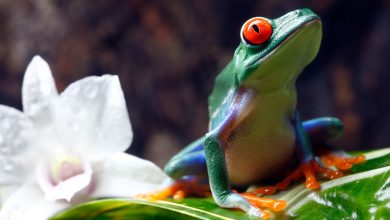
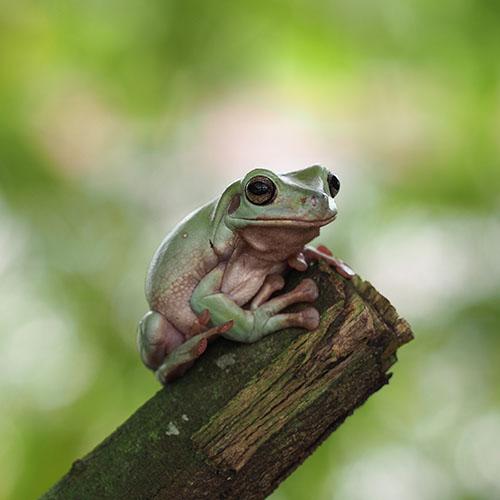
White’s Tree Frogs are medium-sized frogs, with adult males typically measuring between 7-10 cm (3-4 inches) in length, while females tend to be larger, sometimes reaching up to 12 cm (5 inches). Their most distinctive features include their large, golden eyes with horizontal pupils and their smooth, bright green or bluish skin. Some individuals exhibit a more turquoise or teal coloration, and others, especially older frogs, may have a more muted olive tone.
Their skin contains a waxy secretion that helps to keep them hydrated, particularly in dry conditions. This adaptation allows them to survive in areas where water is scarce, such as urban environments. The secretion also helps them repel predators, as it can be mildly toxic.
White’s Tree Frogs have a characteristic “smile,” giving them a somewhat endearing appearance. They are also known for their docile temperament, often tolerating gentle handling, which has made them a favorite among amphibian enthusiasts.
Another fascinating biological feature of White’s Tree Frogs is their ability to control their body temperature. In colder environments, they can enter a state of torpor, slowing down their metabolism to conserve energy. This ability to adapt to varying environmental conditions is one of the reasons they are so resilient in both the wild and captivity.

Behavioural Traits and Diet
In the wild, White’s Tree Frogs feed on a variety of invertebrates, including insects, spiders, and even smaller vertebrates such as mice and other frogs. In captivity, their diet usually consists of crickets, locusts, mealworms, and other feeder insects. They are opportunistic feeders, which means they will eat whenever food is available, often leading to obesity in captive frogs if not properly regulated.
White’s Tree Frogs are known for their distinctive call, which is a loud, low-pitched croak, often heard during mating season. The males are more vocal than the females, and they use their call to attract mates and establish territory. Their vocalizations are often described as sounding like a “barking” noise.
While generally solitary creatures, White’s Tree Frogs will often gather around water sources during the breeding season. In captivity, they can be housed in groups, though care must be taken to avoid overcrowding.
Cultural Significance and Indigenous Knowledge
In the regions where White’s Tree Frogs are native, they have long been recognized by Indigenous Australians, who have coexisted with these amphibians for thousands of years. The frogs are often associated with rain and water due to their calls that typically precede rainfall. In some Indigenous cultures, they are seen as environmental indicators, signaling the onset of the wet season.
White’s Tree Frogs are also believed to possess spiritual significance in some Indigenous communities, symbolizing fertility and renewal. Although their cultural importance has not been as widely documented as some other animals in Aboriginal mythology, they have nonetheless been recognized for their ecological role in sustaining local biodiversity.
Role in Scientific Research and Medicine
In addition to being a beloved pet, White’s Tree Frogs have also played a significant role in scientific research. Due to their docile nature and ease of care, they have been used extensively in various biological and medical studies. One area where they have been particularly valuable is in research on skin secretions. The waxy coating on their skin contains antimicrobial peptides, which help protect them from infections and other pathogens.
These antimicrobial properties have led to significant scientific interest in White’s Tree Frogs, as researchers seek to understand and potentially harness these compounds for medicinal purposes. Studies have suggested that these peptides could be useful in developing new antibiotics, particularly in an age where antibiotic resistance is becoming an increasingly serious issue.
Conservation and Environmental Threats
While White’s Tree Frogs are not currently considered endangered, their populations face several challenges. Habitat loss, pollution, and climate change have all contributed to localized declines in their numbers, particularly in areas undergoing rapid urbanization. Furthermore, the spread of chytridiomycosis, a fungal disease that has devastated amphibian populations globally, poses a significant threat to wild populations.
Chytridiomycosis, caused by the Batrachochytrium dendrobatidis fungus, affects the skin of amphibians, disrupting their ability to absorb water and electrolytes, which can lead to heart failure. Although White’s Tree Frogs are somewhat more resilient to this disease compared to other species, it remains a serious concern for their long-term survival in the wild.
Conservation efforts aimed at protecting their natural habitats, controlling the spread of disease, and minimizing the impact of invasive species are critical for ensuring the continued survival of White’s Tree Frogs in the wild. Organizations in Australia and New Guinea are actively working to preserve natural ecosystems that support these frogs, alongside broader efforts to combat climate change.
White’s Tree Frogs as Pets: A Modern Phenomenon
White’s Tree Frogs have become extremely popular in the global pet trade, owing to their charming appearance, ease of care, and adaptability. As a result, they have become a common sight in pet stores across North America, Europe, and Asia. Their popularity surged in the latter half of the 20th century, as advancements in herpetoculture made it easier for hobbyists to care for exotic amphibians.
In captivity, White’s Tree Frogs thrive in well-maintained vivariums that mimic their natural environment. These vivariums usually include a combination of climbing surfaces, plants, and a water source, creating a miniature ecosystem in which the frogs can feel at home. Bioactive setups, which include live plants, invertebrates, and microfauna, have become especially popular for maintaining these frogs in a healthy, sustainable environment.
When kept as pets, they can live for over 15 years with proper care, making them a long-term commitment for their owners. The species’ resilience, combined with its relatively undemanding care requirements, has earned it the nickname “the frog for beginners” among herpetologists and hobbyists alike.
Despite their popularity, prospective owners are encouraged to adopt from reputable breeders and to avoid supporting the illegal wildlife trade. Captive-bred frogs are generally healthier and less stressed than those captured in the wild, and they are less likely to carry diseases that could harm both their owners and native wildlife.
The history of White’s Tree Frogs is a testament to the adaptability and charm of this remarkable amphibian. From its discovery by John White in 1790 to its status as a beloved pet in modern homes, the journey of this species has been intertwined with human history, scientific research, and cultural significance. As both a symbol of the natural beauty of Australia and New Guinea, and an important subject of study in herpetology, White’s Tree Frogs continue to capture the imagination of scientists, pet owners, and conservationists alike.
References
Cogger, H.G. (2000). Reptiles and Amphibians of Australia. Reed New Holland.
Tyler, M.J. (1994). Australian Frogs: A Natural History. Reed Books.
Hero, J.M. & Morrison, C. (2004). “Frogs of Australia: History, Conservation, and Future.” Journal of Herpetology, 38(1), pp. 1-10.
Barker, J., Grigg, G.C. & Tyler, M.J. (1995). A Field Guide to Australian Frogs. Surrey Beatty & Sons.
White, J. (1790). Journal of a Voyage to New South Wales. Debrett.
Hoser, R. (1989). Australian Reptiles and Frogs. Pierson & Co.
Duellman, W.E. & Trueb, L. (1994). Biology of Amphibians. Johns Hopkins University Press.
Skerratt, L.F. et al. (2007). “Chytridiomycosis in Frogs.” Emerging Infectious Diseases, 13(2), pp. 193-197.
Weldon, C., du Preez, L.H. & Hyatt, A.D. (2004). “Origin of the Amphibian Chytrid Fungus.” Emerging Infectious Diseases, 10(12), pp. 2100-2105.