The fire salamander (Salamandra salamandra) is one of Europe’s most iconic amphibians, easily recognized by its vivid black-and-yellow coloration. This striking amphibian has long captured the imaginations of nature enthusiasts, students, and biologists alike. The species is well-known for its ability to live in damp, wooded areas, and its mysterious behavior of appearing more often during rainy, nocturnal excursions into forests. Despite its prominence, there are many misconceptions about the fire salamander, from its care in captivity to its natural behavior in the wild.
This guide will walk you through the fascinating world of fire salamanders, shedding light on their characteristics, habitat, care, and conservation. Whether you’re a budding herpetologist or just a curious nature lover, this beginner’s guide will help you understand and appreciate this beautiful amphibian.

Physical Characteristics
One of the most distinguishing features of the fire salamander is its vivid coloration. Fire salamanders are typically black with yellow or orange markings, though the specific pattern and intensity of colour can vary depending on subspecies and geographic location. This striking coloration serves a very important purpose: aposematism. In the animal kingdom, bright colours often signal that the animal is poisonous or unpalatable. Indeed, fire salamanders possess glands that secrete toxins—specifically, samandarine, a neurotoxin—that can deter predators from attacking them.
Fire salamanders have a stout, robust body, typically ranging from 15 to 25 cm in length, though some individuals can grow even larger. They have a broad, flat head, and their skin is smooth but moist, like most amphibians. Their strong, muscular limbs are adapted for a terrestrial lifestyle, though they retain the ability to swim if necessary.
Natural Habitat
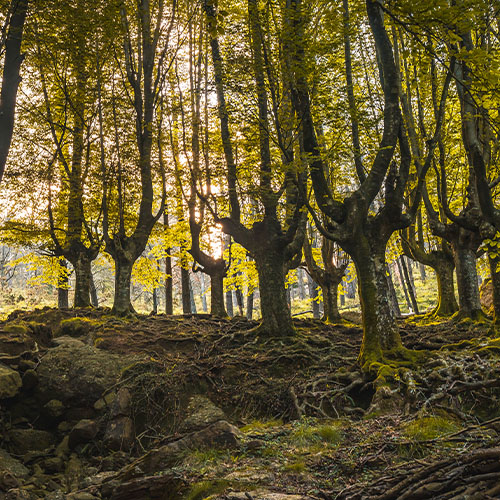
Fire salamanders are native to the forests of central and southern Europe, though their range extends to parts of western Asia and North Africa as well. These salamanders prefer deciduous forests with plenty of moisture, as they require a damp environment to prevent their skin from drying out. The presence of leaf litter, fallen logs, and a rich understory provide the cover they need for hiding from predators and hunting prey.
They are particularly fond of streams, ponds, and small bodies of water where they lay their larvae. However, unlike many other amphibians, fire salamanders are primarily terrestrial and spend much of their adult life on land. They are crepuscular or nocturnal creatures, preferring to be active at dusk or during the night, especially after rain, when the environment is damp.
Diet and Feeding Habits
In the wild, fire salamanders are opportunistic carnivores. Their diet consists of a wide variety of small invertebrates, such as:
- Insects (beetles, flies)
- Spiders
- Earthworms
- Slugs
- Snails
They may also occasionally prey on smaller amphibians or other small creatures if the opportunity arises. Salamanders typically hunt by remaining still and waiting for their prey to come within striking distance. Once their prey is close enough, they snap it up with their sticky, extendable tongues.
Captive fire salamanders can be fed a diet of appropriately sized insects, such as crickets, mealworms, and waxworms. It’s important to dust these insects with a calcium supplement, as captive salamanders may not always receive the nutrients they need from their food. Feeding should occur 2-3 times per week for adults, while juveniles may require more frequent meals.
Life Cycle and Reproduction
Unlike most amphibians that lay eggs in water, fire salamanders have a unique reproductive strategy. They give birth to larvae rather than laying eggs. The female salamander carries the fertilized eggs inside her body until they hatch into larvae, which she then releases into a body of water. The number of larvae produced varies, but a single female can give birth to anywhere from 10 to 70 larvae.
Once released into the water, the larvae resemble tiny, fish-like creatures with external gills that allow them to breathe. Over the course of several months, these larvae undergo a process of metamorphosis, developing legs, lungs, and other features that prepare them for a life on land. After metamorphosis, the juvenile salamanders leave the water and take up residence in the forest, where they will mature into adults over the next few years.
In captivity, breeding fire salamanders can be challenging, as it requires replicating their natural environmental cues, such as seasonal changes in temperature and humidity. However, it is not impossible, and with the right setup, many hobbyists have successfully bred fire salamanders.
Behaviour and Adaptations
Fire salamanders are known for their secretive, slow-moving nature. Unlike frogs, they do not jump or hop, but rather crawl slowly along the forest floor. They are solitary animals and spend much of their time hiding under rocks, logs, or within leaf litter, only venturing out to hunt or during periods of high humidity. When threatened, fire salamanders may exhibit defensive behaviours, such as arching their body or releasing a toxic secretion from their parotoid glands (located just behind the eyes).
The toxins they secrete are particularly potent, making them unpalatable to most predators. However, they are not aggressive creatures and will only release toxins when they feel threatened. In fact, these toxins can cause irritation to human skin or mucous membranes, so it’s essential to handle fire salamanders with care.
Captivity and Care
For those looking to keep fire salamanders as pets, it’s important to understand that these animals have specific care requirements. They are long-lived creatures, with some individuals living for more than 20 years in captivity if cared for properly. Here are the basic considerations for keeping fire salamanders:
- Enclosure: Fire salamanders need a terrarium that mimics their natural forest environment. A tank that is at least 60cm long and 30cm tall is suitable for a single salamander, though larger enclosures are recommended for multiple individuals. The tank should include plenty of hiding spots, such as cork bark, rocks, and live or artificial plants. Additionally, the substrate should be moist but not waterlogged; coconut fiber or a mix of soil and leaf litter works well.
- Humidity and Temperature: Fire salamanders require a humid environment, with humidity levels maintained between 70-80%. Regular misting is necessary, and it’s essential to provide a shallow water dish that is kept clean. The ideal temperature range for fire salamanders is between 12°C and 18°C. They do not tolerate heat well, and temperatures above 24°C can be harmful.
- Diet: As mentioned earlier, fire salamanders should be fed a varied diet of insects, with supplementation of calcium and vitamins. Live food encourages natural hunting behaviour, and it’s crucial to monitor the size of prey to prevent choking or overfeeding.
- Handling: Fire salamanders are best appreciated by observation rather than frequent handling. Their skin absorbs chemicals easily, and oils or chemicals on human skin can cause harm. If handling is necessary, it should be brief, and hands should be thoroughly washed before and after contact.
- Health Issues: Fire salamanders are prone to skin infections, especially in unsanitary or overly wet environments. Regular cleaning of the enclosure and monitoring for signs of illness (such as lethargy, loss of appetite, or skin lesions) are vital for their wellbeing.
Conservation Status
While fire salamanders are relatively widespread across Europe, their populations are under threat from various factors. Habitat destruction, pollution, and the introduction of invasive species have all contributed to population declines in some areas. However, the most pressing concern for fire salamanders in recent years has been the spread of a deadly fungal disease known as Batrachochytrium salamandrivorans (Bsal).
Bsal, a skin-eating fungus, was first identified in the Netherlands in 2013 and has since spread to other parts of Europe. This disease has devastated local fire salamander populations, with some areas experiencing near-total population collapse. Conservationists are working hard to monitor and contain the spread of this fungus, but it remains a significant threat.
Fun Facts
Toxic, but Not Deadly: While the toxins secreted by fire salamanders can irritate human skin and harm small predators, they are generally not deadly to humans unless ingested in large amounts.
Myth and Legend: The fire salamander’s name comes from ancient folklore. It was believed that salamanders could survive in fire, and even that they were born from flames, due to their tendency to hide in logs that were then used for fires.
Regeneration: Like many amphibians, fire salamanders have the remarkable ability to regenerate lost limbs, though the process is slow.
Fire salamanders are fascinating, beautiful creatures that have captured the attention of people for centuries. With their vibrant colours, mysterious nocturnal habits, and impressive defensive capabilities, they remain a symbol of the richness and diversity of European wildlife. For those interested in keeping fire salamanders in captivity, it’s essential to provide the correct environment, diet, and care to ensure these long-lived creatures thrive.
With ongoing conservation efforts and an increasing understanding of their biology, we can hope that future generations will continue to enjoy the presence of the fire salamander in Europe’s forests and beyond.
References
Griffiths, R. A. (1996). Newts and Salamanders of Europe. T & AD Poyser Ltd.
Miaud, C., & Sanuy, D. (2005). “Reproductive ecology and conservation of the fire salamander (Salamandra salamandra)”. Amphibia-Reptilia, 26(4), 507-517.
Steinfartz, S., Veith, M., & Tautz, D. (2000). “Mitochondrial sequence variation in Salamandra salamandra is shaped by distinct glacial refugia”. Molecular Ecology, 9(3), 397-410.
Lötters, S., Wagner, N., & Beckmann, K. (2020). “The Fire Salamander (Salamandra salamandra) and its Microhabitats”. Herpetology Notes, 13, 147-156.
Martel, A., Spitzen-van der Sluijs, A., Blooi, M., Bert, W., Ducatelle, R., Fisher, M. C., & Pasmans, F. (2013). “Batrachochytrium salamandrivorans sp. nov. causes lethal chytridiomycosis in amphibians”. Proceedings of the National Academy of Sciences, 110(38), 15325-15329.