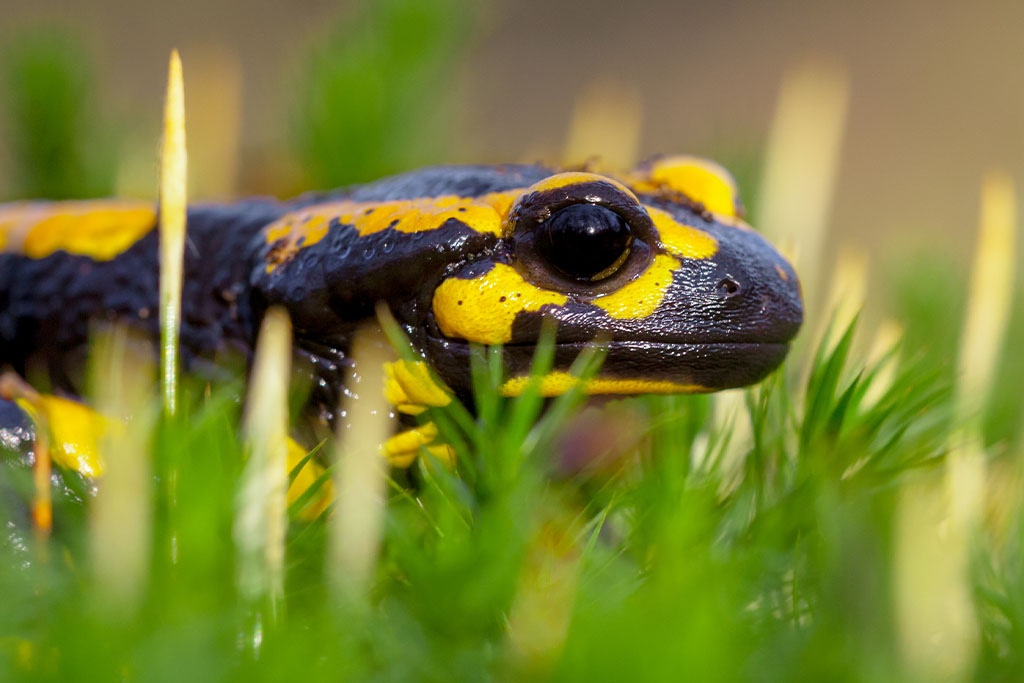
The fire salamander (Salamandra salamandra) is one of the most iconic and well-known amphibians in Europe, celebrated not only for its striking black-and-yellow patterns but also for the myths, legends, and scientific intrigue surrounding it. Fire salamanders have lived on Earth for millions of years, and over time, they have evolved complex survival strategies that include highly toxic skin secretions. Their fascinating history intertwines with folklore, biology, and environmental changes, offering a glimpse into both ancient ecosystems and human culture.
Early Evolution and Fossil Record
The ancestors of modern salamanders date back to the Jurassic period, about 150 million years ago, when amphibians began to diversify into the distinct groups we recognize today, including frogs, toads, and salamanders. Fossils of salamander-like creatures from this era provide clues about their early adaptations to a semi-aquatic lifestyle. By the early Cenozoic era, around 66 million years ago, amphibians resembling the fire salamander began to emerge.
While fossils of fire salamanders themselves are rare, their relatives have been uncovered, giving paleontologists insights into how these animals adapted to changing climates and environments. The fossil record suggests that fire salamanders first appeared during the Miocene epoch, around 5 to 23 million years ago, when Europe was warmer and more humid, creating ideal conditions for amphibians to thrive.
Fire salamanders are part of the family Salamandridae, which includes a wide range of other species like newts and related salamanders. Their evolutionary success can be attributed to their ability to adapt to different environments, from dense forests to mountainous regions. This adaptability has allowed them to survive in a range of climates and through significant environmental changes over millennia.
Mythology and Cultural Significance
The fire salamander has captured the human imagination for centuries, often appearing in European folklore and mythology. In ancient Greece and Rome, fire salamanders were believed to have mystical properties, primarily due to their bright, fiery coloration. Aristotle, the great Greek philosopher, was one of the earliest figures to mention salamanders, erroneously suggesting that they could withstand fire and even extinguish flames by secreting a substance that doused the fire.
This misconception persisted for centuries. In the Middle Ages, the fire salamander was associated with alchemy and magic. Alchemists, in their pursuit of turning base metals into gold, believed salamanders held the secret to controlling fire. The 16th-century alchemist Paracelsus famously wrote about the fire salamander as a symbol of elemental fire, tying it to the idea that salamanders could live within flames.
One of the reasons for this myth might be the salamander’s behaviour. During colder months, fire salamanders often seek refuge in rotting logs, which might later be thrown onto a fire. As the fire heats the wood, the salamanders emerge, seemingly from within the flames, further perpetuating the myth that they are born of or can survive fire.
The Fire Salamander in Science and Natural History
As the study of natural history progressed during the Renaissance and Enlightenment, the fire salamander began to be understood scientifically, rather than mythologically. In 1758, the great Swedish naturalist Carl Linnaeus formally described and classified the fire salamander in his seminal work, Systema Naturae, placing it in the genus Salamandra. Linnaeus’s classification system, which laid the foundation for modern taxonomy, helped demystify the creature by placing it within the animal kingdom, based on observable traits rather than folklore.
The fire salamander’s striking coloration—a warning signal to potential predators—was among the first natural phenomena to be recognized as a form of biological defense, a concept that later gave rise to the study of aposematism. Aposematism is the use of bright colors to warn predators of an animal’s toxicity, and fire salamanders are a textbook example of this evolutionary strategy. Their skin secretes powerful neurotoxins, particularly samandarine, which can cause convulsions, respiratory distress, and even death in small animals that attempt to eat them.
Naturalists like Georges Cuvier and Charles Darwin continued to study these amphibians in the 19th century, focusing on their anatomy, behaviour, and ecological roles. They observed that fire salamanders give birth to live young rather than laying eggs, a rare trait among amphibians. This viviparous reproduction provided further evidence of the species’ unique adaptations.
Biology and Behaviour of Fire Salamanders
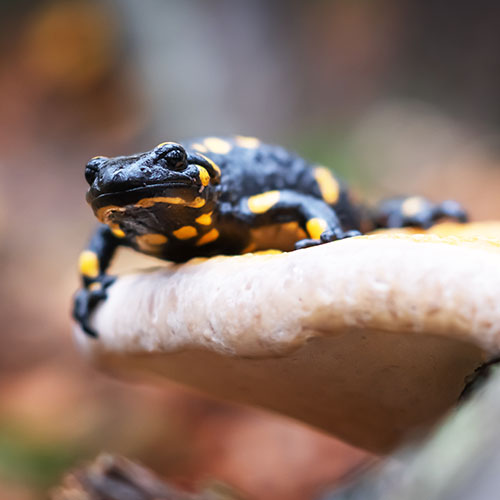
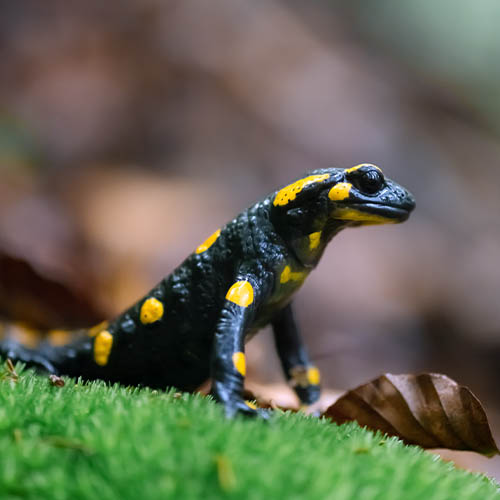
Fire salamanders are medium-sized amphibians, typically measuring between 15 and 25 centimeters in length, although some individuals can grow up to 30 centimeters. Their distinctive black bodies with bright yellow spots or stripes serve as a warning to predators, signaling their toxicity. The patterns on their skin vary greatly from individual to individual, which has allowed scientists to distinguish between subspecies across different geographic regions.
Fire salamanders are primarily nocturnal and thrive in cool, moist environments. During the day, they hide under rocks, logs, or leaf litter to avoid predators and desiccation (drying out). At night, they emerge to hunt for small invertebrates, such as insects, spiders, earthworms, and slugs. They use their sticky tongues to capture prey, much like frogs.
One of the most remarkable aspects of fire salamander biology is their method of reproduction. Unlike many amphibians that lay eggs, fire salamanders exhibit internal fertilization. The male deposits a spermatophore (a capsule containing sperm) on the ground, which the female then picks up with her cloaca. The female retains the fertilized eggs inside her body until they are ready to hatch. Depending on the subspecies and environmental conditions, the female may give birth to larvae in water, or in some cases, fully developed young on land—a process known as ovoviviparity.
The young fire salamanders are born in aquatic environments, where they undergo metamorphosis. Initially, they have external gills for breathing underwater, but as they mature, they develop lungs and become terrestrial. This dual life cycle, starting in water and transitioning to land, is a common trait among many amphibians, though the fire salamander’s reproductive strategy is relatively rare within this group.
Distribution and Habitat
Fire salamanders are native to central and southern Europe, with their range extending from the Iberian Peninsula in the west to parts of western Russia in the east. They are found in a variety of habitats, including deciduous forests, mixed woodlands, and mountain regions, typically at elevations of up to 1,000 meters. These salamanders are particularly associated with forested areas where there is ample cover and moisture, as they rely on damp environments to prevent their skin from drying out.
The species is divided into several subspecies, each adapted to specific environmental conditions. For example, Salamandra salamandra terrestris is commonly found in the lowlands of western and central Europe, while Salamandra salamandra fastuosa inhabits the Pyrenees mountain range, showing adaptations to higher altitudes. These subspecies vary in size, coloration, and behaviour, reflecting their diverse habitats.
Conservation Status and Threats
Despite their wide range, fire salamanders face several threats to their survival, leading to concerns about their long-term conservation status. Habitat loss due to deforestation, urbanization, and agricultural expansion is one of the primary challenges facing the species. As their forest habitats are destroyed or fragmented, fire salamanders lose the cool, moist environments they depend on for survival.
Another significant threat comes from pollution, particularly water contamination. Fire salamanders, like many amphibians, have highly permeable skin, making them particularly vulnerable to pollutants in both their aquatic and terrestrial environments. Pesticides, heavy metals, and other contaminants can severely impact their populations, reducing reproductive success and causing deformities in larvae.
Climate change is also posing a new and growing threat to fire salamanders. As temperatures rise and weather patterns become more erratic, the cool, humid environments that fire salamanders rely on are becoming less predictable. Prolonged droughts and increased temperatures can lead to desiccation, reducing the amount of suitable habitat available to these amphibians.
In recent years, an emerging threat has come from a fungal disease known as Batrachochytrium salamandrivorans (Bsal), which causes skin lesions and can be fatal to salamanders. Bsal was first identified in 2013 and has since spread across parts of Europe, devastating fire salamander populations. The disease likely originated in Asia and was introduced to Europe through the pet trade. Efforts to contain the spread of Bsal are ongoing, but the fungus remains a serious concern for the future of fire salamanders and other amphibian species.
The Role of Fire Salamanders in Ecosystems
Fire salamanders play a crucial role in the ecosystems they inhabit. As both predators and prey, they are important contributors to the food web. Their diet of invertebrates helps regulate populations of insects and other small organisms, while they, in turn, serve as prey for larger animals, such as birds, snakes, and mammals.
Additionally, fire salamanders are bioindicators, meaning that their presence (or absence) can provide valuable information about the health of an ecosystem. Because of their sensitivity to environmental changes, such as pollution and habitat degradation, declines in fire salamander populations often signal broader ecological problems that may also affect other species.
Conservation Efforts and the Future
Conservation efforts aimed at protecting fire salamanders focus on habitat preservation, disease management, and public education. Protecting and restoring forested habitats is critical to ensuring the long-term survival of fire salamanders. In some regions, reforestation projects and the establishment of protected areas have helped safeguard salamander populations.
Efforts to combat the spread of Bsal are also essential. Quarantine measures, restrictions on the trade of amphibians, and ongoing research into disease-resistant populations are all part of the broader strategy to mitigate the impact of this deadly fungus.
Public education plays a key role in conservation, as raising awareness about the threats facing fire salamanders can help garner support for conservation initiatives. By highlighting the importance of fire salamanders in maintaining healthy ecosystems and the need for their protection, conservationists hope to inspire action at both the local and global levels.
The history of fire salamanders is a rich tapestry of evolution, mythology, and scientific discovery. These remarkable creatures have survived for millions of years, adapting to changing environments and playing a vital role in the ecosystems they inhabit. However, they now face unprecedented challenges, from habitat loss and climate change to the spread of deadly diseases. Through concerted conservation efforts and continued research, we can ensure that fire salamanders continue to thrive in the wild, preserving their place in the natural world and our cultural heritage.
References
Arnold, E. Nicholas, and J. A. Burton. A Field Guide to the Reptiles and Amphibians of Britain and Europe. Collins, 1978.
Griffiths, Richard A. The Fire Salamander. Naturalist Handbook, 1996.
Stebbins, Robert C., and Nathan W. Cohen. A Natural History of Amphibians. Princeton University Press, 1995.
Thiesmeier, Bernhard. Der Feuersalamander: Salamandra salamandra. Laurenti-Verlag, 2004.
Vences, Miguel, and Axel Kwet. “Salamandra Salamandra.” IUCN Red List of Threatened Species, IUCN, 2020, www.iucnredlist.org.