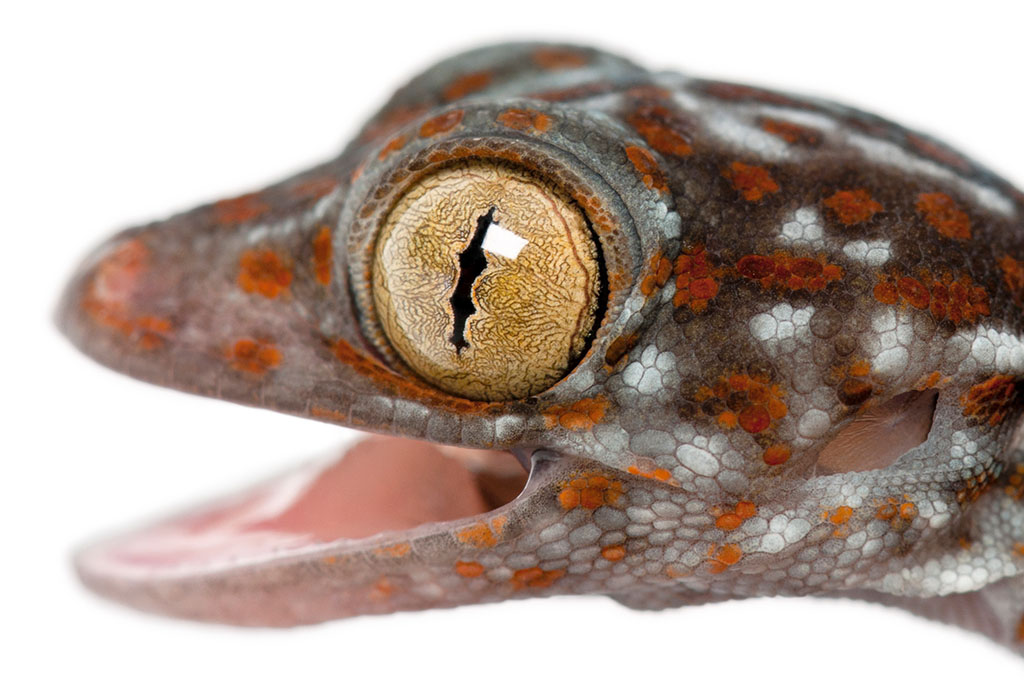
The Tokay Gecko (Gekko gecko) is one of the most iconic reptile species known to humans, both for its striking appearance and its loud, distinctive call. Native to Southeast Asia and other tropical regions, the Tokay Gecko has played a significant role in the natural ecosystems of the area and in various human cultures throughout history. From its representation in folklore to its role in the pet trade and conservation efforts today, the Tokay Gecko is a species rich with history and intrigue. This article explores the evolutionary background, cultural significance, and the journey of the Tokay Gecko from the wild to human households.
Origins and Evolutionary History
The Tokay Gecko belongs to the family Gekkonidae, which is one of the most diverse groups of lizards, consisting of over 1,500 species. Geckos as a family have existed for more than 100 million years, dating back to the age of the dinosaurs. Fossil records indicate that they were already well adapted to life in various environments, including tropical forests, by the time the Cretaceous period ended.
While the exact timeline for the appearance of the Tokay Gecko as a distinct species remains unclear, it is believed to have evolved during the late Tertiary period. The tropical regions of Southeast Asia provided the perfect environment for the development of arboreal (tree-dwelling) reptiles. Tokay Geckos, with their specialized toe pads that allow them to cling to surfaces, evolved alongside many other species of geckos to exploit the abundance of insects in the forests.
Physical Characteristics and Behaviour
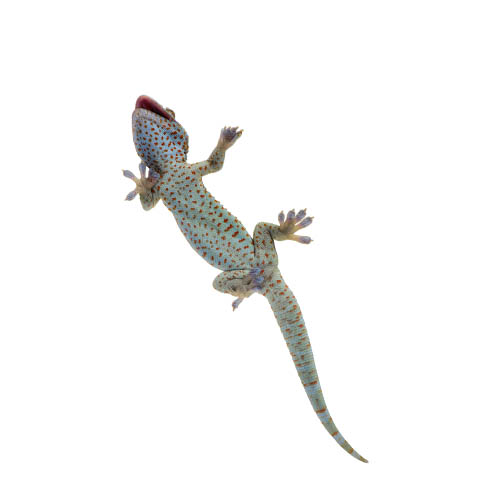
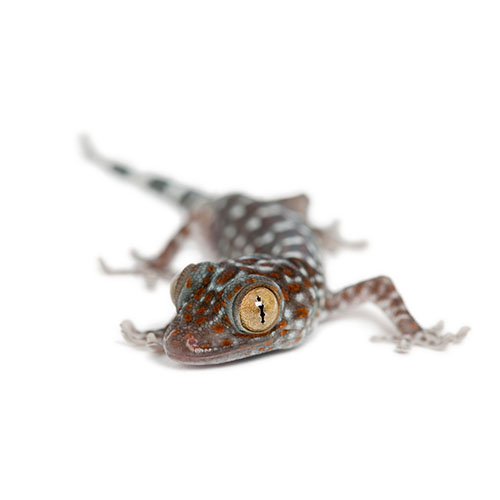
One of the most striking features of the Tokay Gecko is its vibrant coloration. Typically, it has a blue-grey or greenish background with bright orange or red spots. This coloration helps it blend into the foliage of its natural habitat, providing excellent camouflage from predators and prey alike. Tokay Geckos are nocturnal creatures, meaning they are most active at night, hunting for insects, small mammals, and occasionally other smaller reptiles.
The name “Tokay” is derived from the sound of its distinctive call, which sounds like a repetitive “To-kay” or “Ge-ko.” These loud calls, especially common during mating season, help the geckos to communicate and establish territory.
Early Cultural Connections
The Tokay Gecko has long been a subject of fascination in the cultures of Southeast Asia. Its vocalizations have inspired local myths and superstitions. For example, in parts of Thailand and the Philippines, hearing a Tokay Gecko’s call is believed to bring good luck. In other regions, the number of calls a gecko makes is said to correspond to the number of years of good fortune one can expect.
In traditional medicine practices, particularly in China and Southeast Asia, the Tokay Gecko has been used for centuries. Dried Tokay Geckos are believed to have medicinal properties, including the ability to treat respiratory issues, boost virility, and strengthen the immune system. This has led to an extensive market for Tokay Gecko parts, particularly in traditional Chinese medicine, which has contributed to its exploitation and decline in some areas.
Colonial Encounters and Western Discovery
European exploration of Southeast Asia during the colonial period introduced Western naturalists to the incredible biodiversity of the region. Early accounts of Tokay Geckos can be found in the writings of 18th and 19th-century explorers who were astonished by the strange sounds and behaviours of these reptiles. Western scientists began to study and classify the species in more detail during this time, with the Tokay Gecko formally named Gekko gecko by the renowned naturalist Carl Linnaeus in 1758.
Tokay Geckos were initially viewed as curiosities in Europe, often collected by naturalists or kept in private menageries. The understanding of their biology and behaviour, however, remained limited until more modern scientific methods and technology became available.
Role in the Pet Trade
The latter half of the 20th century saw a boom in the reptile pet trade, with Tokay Geckos becoming one of the most popular species for collectors and enthusiasts. Their hardy nature, striking appearance, and relatively easy care requirements made them attractive options for both beginner and experienced reptile keepers.
However, the popularity of Tokay Geckos in the pet trade has not come without issues. Wild populations have suffered due to overcollection, particularly in countries like Thailand, Indonesia, and Vietnam. Many Tokay Geckos are taken from the wild and sold in local markets or exported abroad, contributing to declining populations in their natural habitat.
In response to this, some governments have introduced regulations to control the trade of Tokay Geckos, and captive breeding programs have been established to reduce the demand for wild-caught specimens. Despite these efforts, illegal trafficking remains a problem in some areas, and the species is listed under Appendix II of the Convention on International Trade in Endangered Species (CITES), which regulates international trade to ensure it does not threaten their survival.
Conservation Status and Challenges
The conservation status of Tokay Geckos is complicated. While they are not currently listed as endangered by the International Union for Conservation of Nature (IUCN), their populations are in decline in many areas due to habitat destruction, collection for the pet trade, and use in traditional medicine.
Habitat loss is one of the primary threats facing Tokay Geckos today. The rapid deforestation and urbanization occurring in Southeast Asia have significantly reduced the areas where they can thrive. As trees are cut down and forests are cleared, Tokay Geckos lose not only their homes but also their primary food sources.
Conservation efforts are being made, but they often face significant challenges. The combination of local demand for medicinal uses, international demand for pets, and ongoing habitat destruction makes it difficult to protect the species effectively. In addition, the widespread nature of the Tokay Gecko, which spans multiple countries, complicates efforts to implement consistent conservation strategies across its range.
Role in Scientific Research
Beyond their cultural and ecological significance, Tokay Geckos have also become an important species in scientific research. One of the most fascinating aspects of geckos in general, and Tokay Geckos in particular, is their ability to cling to surfaces using specialized adhesive pads on their feet. The microscopic structures of these pads allow them to adhere to surfaces using van der Waals forces, which has inspired biomimetic research in fields ranging from robotics to materials science.
The Tokay Gecko’s climbing ability has led to innovations in creating synthetic adhesives that mimic their foot pads. These gecko-inspired materials have potential applications in medical devices, space exploration, and even everyday items like tape and glue.
In addition to their adhesive properties, Tokay Geckos have been used in studies on regeneration. Like many reptiles, they are capable of regrowing lost tails, and scientists are studying the mechanisms behind this process in the hopes of advancing research into regenerative medicine for humans.
Tokay Geckos in Modern Popular Culture
The unique appearance and vocalizations of the Tokay Gecko have also cemented its place in modern popular culture. They have appeared in various forms of media, including television, film, and advertising. In some countries, the Tokay Gecko is a common character in children’s stories and cartoons.
In Western cultures, the Tokay Gecko has become something of a symbol for exotic pets and reptiles. Their image is often used in advertisements and logos for reptile-related products and services. They are frequently featured in documentaries about Southeast Asian wildlife, where their distinctive calls and vibrant colours captivate audiences.
The Future of the Tokay Gecko
The future of the Tokay Gecko is uncertain. While it remains a common species in many areas, the threats posed by habitat destruction, overcollection, and illegal trade cannot be ignored. Conservation efforts will need to be strengthened and expanded to ensure that future generations can continue to hear the calls of this remarkable reptile in the wild.
Captive breeding programs offer hope for reducing the pressure on wild populations, but these must be carefully managed to ensure genetic diversity and the health of captive-bred geckos. Additionally, education and awareness campaigns can help reduce demand for Tokay Geckos in traditional medicine and the pet trade, allowing wild populations to recover.
Tokay Geckos have a long and storied history, both in their native habitats and in human culture. From ancient folklore to modern scientific research, their influence can be felt in a variety of ways. Ensuring their survival will require a combination of conservation efforts, sustainable trade practices, and a deeper understanding of the importance of preserving the natural world.
The Tokay Gecko is a species with a rich history, spanning millions of years of evolution and centuries of cultural significance. From their natural habitats in the forests of Southeast Asia to their roles in scientific innovation and popular culture, Tokay Geckos are truly remarkable creatures. Their future, however, depends on the actions of humans, who must balance the demand for these fascinating animals with the need to protect their natural environments and prevent overexploitation.
References
- Linnaeus, C. (1758). Systema Naturae. Stockholm: Laurentii Salvii.
- Zug, G. R., & Ernst, C. H. (1996). Reptiles and Amphibians of Southeast Asia. Princeton University Press.
- Rösler, H. (1995). Geckos of the World. Leipzig: Edition Chimaira.
- Das, I. (2010). A Photographic Guide to the Snakes and Other Reptiles of Borneo. New Holland Publishers.
- Pianka, E. R., & Vitt, L. J. (2003). Lizards: Windows to the Evolution of Diversity. University of California Press.
- Bauer, A. M., & Russell, A. P. (1995). “The Role of the Tokay Gecko in Folklore and Traditional Medicine in Southeast Asia.” Journal of Ethnobiology 15(2), 203-217.
- CITES. (2020). “Tokay Gecko Trade and Conservation Status.” Convention on International Trade in Endangered Species of Wild Fauna and Flora.
- Russell, A. P., & Higham, T. E. (2009). “Gecko Adhesion: Evolutionary and Biomechanical Perspectives.” Journal of Experimental Biology, 212(7), 989-1003.
- Tokay Gecko Conservation Alliance. (2022). “Conservation Strategies for Tokay Geckos.”