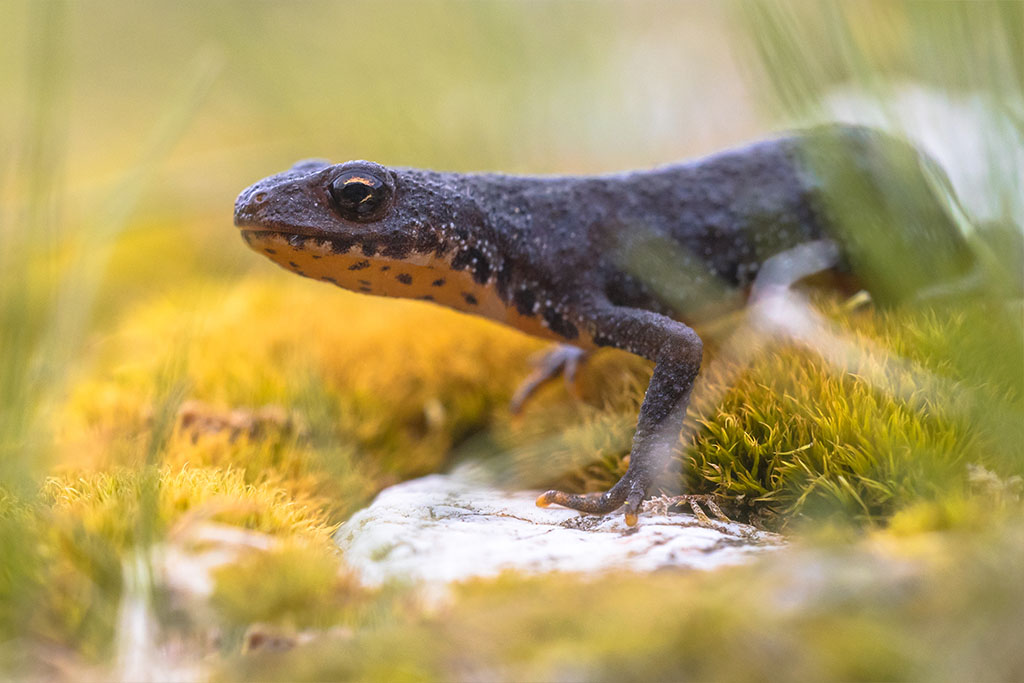
Alpine newts (Ichthyosaura alpestris) are fascinating amphibians native to the mountainous regions of Europe. As both pets and part of conservation efforts, understanding how to provide them with a suitable habitat is crucial for their well-being. The choice of enclosure is one of the most significant aspects of newt care, impacting their health, behaviour, and overall quality of life. In this article, we will delve into the key considerations for selecting the right enclosure for your Alpine newt, covering aspects such as size, materials, heating, humidity, and habitat enrichment.
Understanding the Alpine Newt’s Natural Habitat
To create an optimal environment for your Alpine newt, it’s essential to understand its natural habitat. Alpine newts inhabit freshwater ponds, streams, and other aquatic environments in Europe, typically found in temperate, mountainous regions. They thrive in cool, clean water with abundant vegetation and hiding spots, which offer security from predators. This understanding informs many of the decisions you will make regarding their enclosure.

Enclosure Size
Minimum Size Requirements
When choosing an enclosure, size matters. For a single Alpine newt, a minimum of 60 litres (approximately 15 gallons) is recommended. However, larger enclosures are always better, allowing for more space for swimming, exploring, and creating a more complex environment.
Group Housing
If you plan to house multiple Alpine newts, the general rule is to add at least 30 litres (around 8 gallons) for each additional newt. This ensures that each newt has sufficient space to establish its territory and reduces stress associated with overcrowding.
Enclosure Type
Aquatic vs. Semi-Aquatic
Alpine newts are primarily aquatic during the breeding season but also spend considerable time on land. Therefore, a semi-aquatic enclosure that provides both water and land areas is ideal.
- Aquatic Enclosures: If you’re leaning towards a fully aquatic setup, ensure that the water is deep enough (at least 20-30 cm) to allow swimming but not too deep that the newts struggle to reach the surface.
- Semi-Aquatic Enclosures: These setups typically consist of a water section and a dry area for basking and resting. A shallow water area with a sloping bank can help facilitate easy access for the newts.
Materials for Enclosures
Glass vs. Plastic
When considering materials, glass aquariums are the most common choice for newt enclosures due to their durability and ease of cleaning. However, plastic terrariums can also be used, provided they are UV-resistant and of good quality.
Tank Sealants
If you are building a custom enclosure or modifying an existing one, ensure that any sealants or adhesives used are non-toxic and safe for aquatic environments.
Heating and Lighting
Temperature Requirements
Alpine newts prefer cooler temperatures, typically ranging from 15°C to 20°C (59°F to 68°F). If you live in a warmer climate, consider a heater with a thermostat to maintain this temperature range.
Lighting
While Alpine newts do not require intense lighting, a low-output fluorescent or LED light can simulate a natural day/night cycle. Ensure that any lighting used does not overheat the enclosure, as newts are sensitive to temperature fluctuations.
Water Quality
Filtration
Good water quality is vital for the health of Alpine newts. Use a filtration system to maintain clean water, ideally with a sponge filter that provides gentle water flow without creating strong currents.
Water Parameters
Regularly test the water for pH, ammonia, nitrites, and nitrates. The ideal pH for Alpine newts is between 6.5 and 7.5. Ammonia and nitrite levels should always be zero, while nitrate levels should be kept below 40 ppm.
Substrate Selection
Aquatic Substrate
In the water section, a fine gravel substrate is preferred, as it allows for easy cleaning and provides a natural look. Avoid sharp edges that could injure the newts.
Land Area Substrate
For the terrestrial section, use a mix of organic soil, coconut coir, and leaf litter to create a natural environment. This substrate will retain moisture, supporting any terrestrial plants you may choose to include.
Habitat Enrichment
Creating a stimulating environment is essential for the well-being of your Alpine newts. Here are some ideas for habitat enrichment:
Plants
Live aquatic plants such as Java moss, hornwort, and elodea provide hiding spots and improve water quality. On land, consider using ferns or moss, which create a naturalistic environment.
Hiding Places
Provide various hiding spots using rocks, driftwood, or commercially available decorations. This is crucial, as newts can become stressed without places to retreat and feel secure.
Climbing Opportunities
In a semi-aquatic setup, include structures that allow climbing and basking. This encourages natural behaviour and exercise.
Maintenance and Cleaning
Regular Maintenance
To ensure a healthy environment, perform regular water changes, usually 20% weekly, and monitor water quality parameters. Remove uneaten food and waste promptly to prevent water quality degradation.
Cleaning the Enclosure
Thoroughly clean the enclosure every month, replacing the substrate as needed and disinfecting surfaces with a reptile-safe cleaner. Rinse thoroughly to remove any residue before reintroducing the newts.
Observing Behaviour
Pay attention to your Alpine newts’ behaviour after setting up their enclosure. They may take time to acclimate to their new environment. Look for signs of stress, such as excessive hiding, loss of appetite, or unusual swimming patterns. Adjust the habitat as necessary to ensure their comfort.
Choosing the right enclosure for your Alpine newt involves careful consideration of size, materials, heating, and habitat enrichment. By understanding their natural habitat and needs, you can create a safe and stimulating environment that supports their health and well-being. With proper care and attention, your Alpine newt can thrive in its new home, providing you with years of enjoyment as a pet.
References
Lentz, A. (2021). Amphibian Care: A Practical Guide to Keeping Your Newts Happy and Healthy. Wildlife Publications.
Scott, J. (2018). The Complete Guide to Newt Care. Aquatic Books.
Raffaelli, D. (2019). Building Naturalistic Aquatic Enclosures: The Amphibian Keeper’s Handbook. Eco-Friendly Publishing.
Smith, T. & Jones, L. (2020). Creating a Healthy Environment for Your Newts. Herpetological Journal.
Green, H. (2017). Water Quality in Aquatic Enclosures: Best Practices for Amphibians. Conservation Press.
Johnson, P. (2023). Aquatic Plants for Amphibian Habitats. GreenThumb Publications.